
About Elsa
Bringing what is less known and invisible into view so we can engage more fully with what is present

I move between the roles of coach, facilitator, and educator.
In each role, I focus on supporting individuals to navigate change, leverage their capabilities, and evolve to meet the challenges they are facing most effectively.
Since 2012 I've been advising network leaders, designing and facilitating multi-stakeholder convenings for large-scale collaborations around the world, supporting groups to do more together than any single organisation could achieve alone.
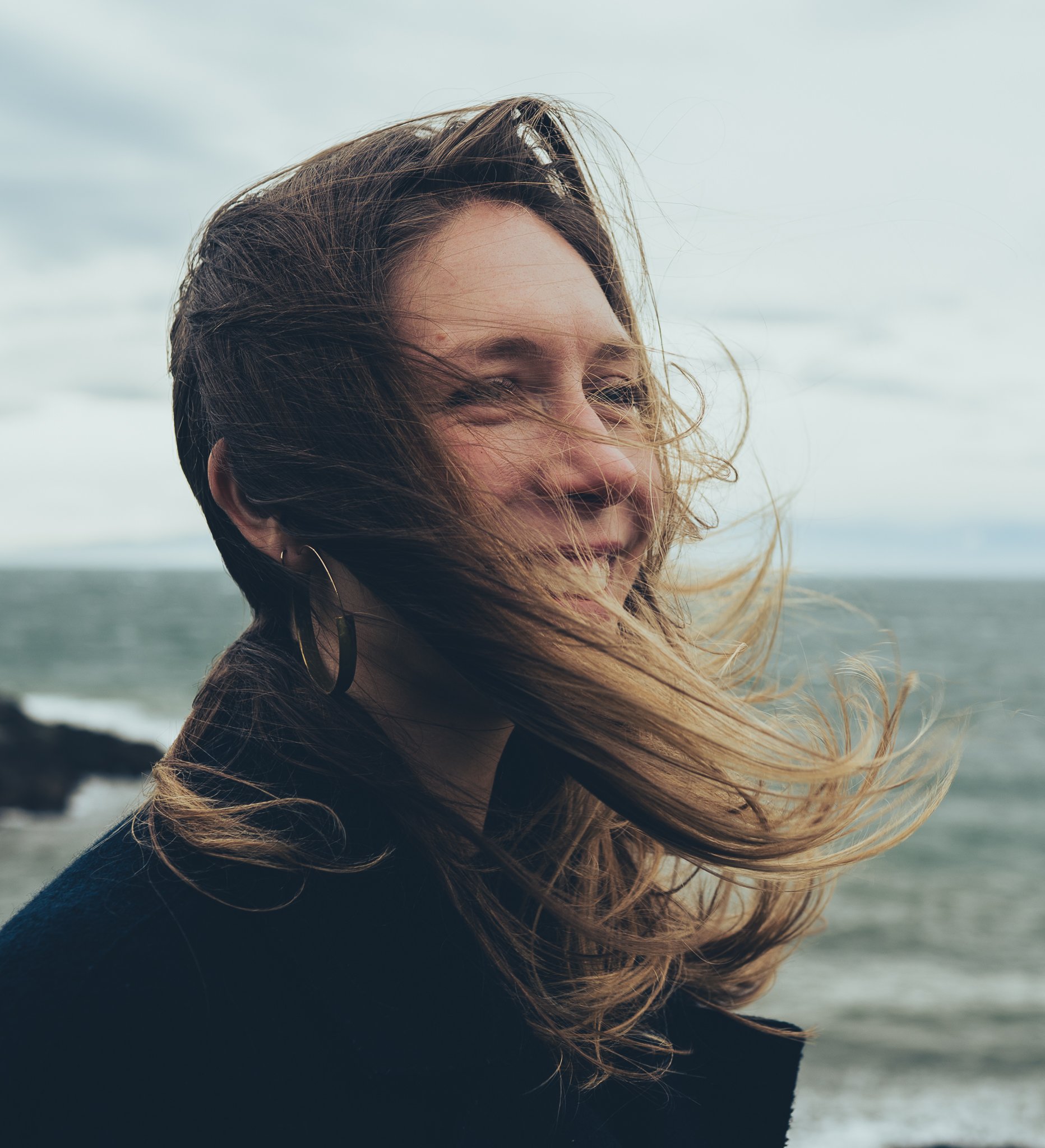
As an educator I create spaces for immersive learning, supporting individuals to reach an understanding that is alive and relevant to who they are, and that hones their capacity to meet uncertainty as it arises.
My approach is rooted in wayfinding: how we adapt, learn as we go, and make sound decisions even when there is no clear path forward. Rather than relying on outdated assumptions, wayfinding invites us to notice what is actually happening and orient toward a larger horizon of possibility.
Across all of my work I am deeply passionate about finding ways to elevate and honour lived experience and reclaim our attention so we can direct it toward what matters most.
I am on faculty with the Processwork Institute, a senior fellow at the Metavision Institute, a co-founder of Circle Generation, and a co-creator of the Converge Network. I hold a BA in Anthropology, an MA and Diploma in Process-Oriented Psychology, and a PhD from the University of the West of England in Leadership and Management. My research focused on wayfinding: how practitioners orient and find their way in uncertain and complex situations, surfacing innate capabilities that keep them responsive, engaged, and deeply alive in their work.
Originally from the US, I now live in Victoria, BC, Canada, on the traditional territory of many nations including the Lekwungen, Songhees, and Esquimalt.
How I Work
My facilitation is spacious and precise. We slow down enough to perceive what’s actually happening, then move.
Drawing from my background in process work (process-oriented psychology), depth psychology, network practice, and years inside multi-stakeholder, cross-cultural collaborations, I help people make sense of their experience and discern their next steps.
The focus of my work is about finding an orientation: language, practices, and stances you can draw upon to meet the moment and the variety of situations you find yourself in, and inhabit more of who you are in the process.
Sometimes that looks like guiding a leadership team through a stuck moment until the next true move is visible to everyone. Sometimes it’s with an individual, partnering with them to surface insights and explore ways of engaging with tension, uncertainty, and transitions, that deepen their work and leave them feeling more resourced.
Other times it's with a cohort, learning the capabilities of wayfinding in their personal lives, attentional practices, way of engaging the unknown, and the discipline of harvesting and transmuting a variety of experience so it becomes embodied know-how.

Values
-
Resisting numbness, autopilot, or unquestioned conformity
-
Leaning into the depths of the moment, participating fully rather than just ticking boxes or going through the motions.
-
Syncing action with inner knowing, felt sense, contextual information and the realities of one’s environment.
-
Restoring spark in people and systems so they feel alive rather than drained or constrained.
-
Ensuring the inner and outer, the intuitive and the structural, inform each other.
-
Fostering change that moves and adapts with the context instead of importing cookie-cutter solutions.
The Shoulders I Stand On
I stand on the shoulders of many teachers, elders and guides:
Dr. Charlotte von Bülow, Dr. Peter Simpson, my PhD supervisors, my mentors Christina Nielsen and Dr. Julia Wolfson. Dr. Claire Jankelson and Binta Ayofemi who both have shown me the magic an educator can embody. My incredible parents Lynne and Robert, who embody wayfinding as a principle in how they lead their lives.
My teachers Salome Schwartz, Dr. Amy and Arnold Mindell and Dr. Clarissa Pinkola Estes.
The work of scholars such Robert Chia, Tim Ingold, Chellie Spiller, Donna Ladkin, and Joshua Bergamin have also played a significant role in shaping my understanding.
And my husband, Patrick O’Neill, who I learn from each day.

Curriculum Vitae
Dr. Elsa Henderson, MA, Dipl. PW, PhD
I'm a coach, facilitator, and scholar-practitioner specializing in adaptive leadership and process-oriented approaches to navigating complexity.
Training & Credentials
My approach is grounded in over a decade of training in relational and process-oriented methodologies:
PhD in Leadership and Management (2025) – University of the West of England, Bristol. My research explored wayfinding in dynamic complexity, examining how organizational practitioners (leaders, managers and consultants) get unstuck, make sense of and navigate uncertain and complex environments.
MA & Diploma in Process-Oriented Psychology (2013-2017) – Process Work Institute, Portland, Oregon. Specialized training in facilitation, conflict resolution, psychotherapeutic work and working with somatic experiences through post-jungian and process-oriented approaches.
Microphenomenological Interview Training (2023-2024) – Three-month intensive training in microphenomenological interviewing methods.
Bachelor of Arts in Anthropology and Psychology (2011-2013) – Hampshire College, Amherst, Massachusetts.
ACC ICF Certified Coach (2013-Present) – International Coaching Federation Associate Certified Coach, with additional advanced certifications from the Global Coaching Institute and Apositiva.
Certified Grundkraft Facilitator and Trainer – Leaders Empowered certification in embodied and process-oriented leadership practices.
Training with Dr. Clarissa Pinkola Estés (2013-2018) – Four certificates in developmental, depth, and expressive arts practices.